Kitchen Designs & Measurements: A Complete Guide
Published: 22 January 2026
Kitchen Sizes & Dimensions
Getting your kitchen dimensions right is one of the most important parts of planning a new kitchen. While there are industry-standard kitchen measurements that most designs are built around, no two homes — or homeowners — are ever the same. From uneven walls and period features to modern open-plan layouts, every space brings its own opportunities and challenges.
At More Kitchens, we believe great kitchen design starts with understanding how a space is going to be used. Rather than offering off-the-shelf solutions, we take a personal, hands-on approach — working closely with each client to design a kitchen that suits their home, their lifestyle and the way they live day to day. Standard kitchen unit sizes provide a helpful starting point, but it’s the thoughtful design and careful planning that ensure everything works together seamlessly.
This guide is designed to give you clear, practical insight into kitchen dimensions and measurements, helping you make sense of the numbers and understand what’s possible within your space. It’s about giving you the confidence to plan effectively, before moving on to the design stage.

What Is the Average Kitchen Size in the UK?
The average kitchen size in the UK is often smaller than people expect, particularly in older properties, terraces and apartments. While around 13 square metres is commonly quoted as the average size of a kitchen in the UK, the reality varies significantly depending on the age of the property and the layout.
For example, a galley kitchen may have a compact footprint but still function beautifully with the right layout, while an open-plan kitchen often incorporates dining and living areas, giving much more flexibility.
As a general guide:
> Small kitchens are often under 10–12 square metres
> Medium kitchens typically range from 12–20 square metres
> Large or open-plan kitchens are usually over 20 square metres
If your space falls into the smaller category, thoughtful planning becomes even more important. Clever layouts, well-proportioned units and smart storage solutions can make a compact kitchen feel surprisingly spacious. Our guide to making the most of a small kitchen shares practical ideas for maximising space, improving flow and getting more from smaller kitchen dimensions.
Understanding your kitchen size early helps you make confident decisions about layout, storage and whether features such as an island or breakfast bar are achievable.
If you’re right at the beginning of the process, our guide on how to measure a kitchen offers a helpful overview of what to consider before you start your design journey.

Standard Kitchen Unit & Cabinet Dimensions
Most kitchens are designed around a set of standard kitchen dimensions, which makes planning layouts and appliance placement much easier. These measurements form the foundation of almost every fitted kitchen in the UK.
Kitchen Base Unit Dimensions:
> Standard depth: 570–600mm
> Standard unit height: 870mm
> Typical finished height (including worktop): around 900mm
Kitchen Wall Unit Dimensions:
> Standard depth: 300mm — shallower than base units to allow comfortable working space below
> Heights: vary depending on ceiling height and design preference
Standard Kitchen Unit Widths:
1. 300mm
2. 400mm
3. 500mm
4. 600mm (most common)
5. 800mm
6. 1000mm
Standard kitchen units are designed to accommodate most integrated appliances, such as ovens, dishwashers and fridge freezers, which are typically manufactured to consistent widths for easier planning.

Kitchen Corner Unit Dimensions
Corner units play an important role in maximising storage, but they do require careful planning. Whether used as base units or wall units, corner cupboards generally follow standard heights and depths, with the main variation being the width and configuration.
Straight Kitchen Corner Unit Dimensions:
A straight (or blind) corner unit runs into the corner of the room, featuring a single door with a concealed section behind it. While this type of corner can be harder to access, modern internal fittings such as pull-out shelves and corner storage systems can significantly improve usability.
Standard width options for straight kitchen corner units typically include:
1. 900mm
2. 1000mm
3. 1100mm
The exact size chosen will depend on the door opening and how the surrounding units are arranged within the overall kitchen layout.
L-Shaped Kitchen Corner Unit Dimensions:
An alternative option is an L-shaped corner unit, which features two doors set at right angles to one another. This design generally offers easier access and can make better use of the available corner space.
Although there are various opening mechanisms available, the most common standard size for an L-shaped corner unit is:
1. 910mm × 910mm
Tall Unit Kitchen Cupboard Dimensions
Tall units and floor-to-ceiling cupboards are a popular choice for maximising storage and housing integrated appliances such as ovens, fridge freezers and larder units. They help create a clean, built-in look and are suitable for both compact kitchens and larger open-plan designs.
While layouts and finishes can be tailored, tall units generally follow standard kitchen dimensions to ensure appliances integrate neatly and align with surrounding units.
Typical tall unit kitchen cupboard dimensions include:
> Heights: 180cm, 195cm or 215cm
> Depth: 600mm
> Plinth height: 150mm
> Widths: 300mm to 600mm
The height selected will usually depend on ceiling height and the overall design of the kitchen, whether that’s a full floor-to-ceiling run or a layout that aligns with wall units above. Tall units are often used to combine appliance housing with generous pantry-style storage, making them a practical and versatile solution in many kitchen designs.
When planning standard, corner and tall units, it’s also worth thinking about how storage will work internally, not just externally. Features such as pull-out corner mechanisms, internal shelving, larder cupboards and pantry-style storage can make a significant difference to how practical your kitchen feels day to day.
Our article on kitchen storage ideas explores these options in more detail, showing how thoughtful storage solutions can help you get the very best out of every type of kitchen unit.

Worktop Heights & Kitchen Slab Widths
Worktop height plays a big role in how comfortable your kitchen feels to use. In most UK homes, the standard kitchen worktop height is around 900mm, which works well for everyday cooking and food preparation.
If you’re taller, shorter or have specific requirements, this can be adjusted during the design process. Your choice of material can also influence thickness, finish and overhangs — our guide to choosing kitchen worktops explores these options in more detail.
Kitchen Slab Width (Worktop Depth):
The term kitchen slab width usually refers to worktop depth:
> Standard kitchen slab width: 600mm
> Kitchen platform width for breakfast bars: 900mm or more
Allowing enough depth is especially important where seating is involved, ensuring comfort without compromising walkways.

Breakfast Bar Dimensions
Ideal for small kitchens and busy family homes, a breakfast bar is a great way to introduce informal seating and make the kitchen more sociable.
While there’s no single standard size for breakfast bar dimensions, there are some practical guidelines worth following.
What Is the Minimum Height of a Breakfast Bar?:
A traditional bar-height breakfast bar is usually around 110cm high. However, in many modern kitchens, breakfast bars are designed as an extension of the base units.
In these cases, we often recommend keeping the breakfast bar at the same height as the worktop — around 90cm — which feels more natural for everyday use and works well with standard seating.
Breakfast Bar Seating Dimensions:
To ensure everyone can sit comfortably:
> Allow around 600mm width per person
> Allow 35–40cm depth for eating and leg room
Most bar stools range between 60–80cm in height, depending on whether they’re designed for counter-height or bar-height seating.
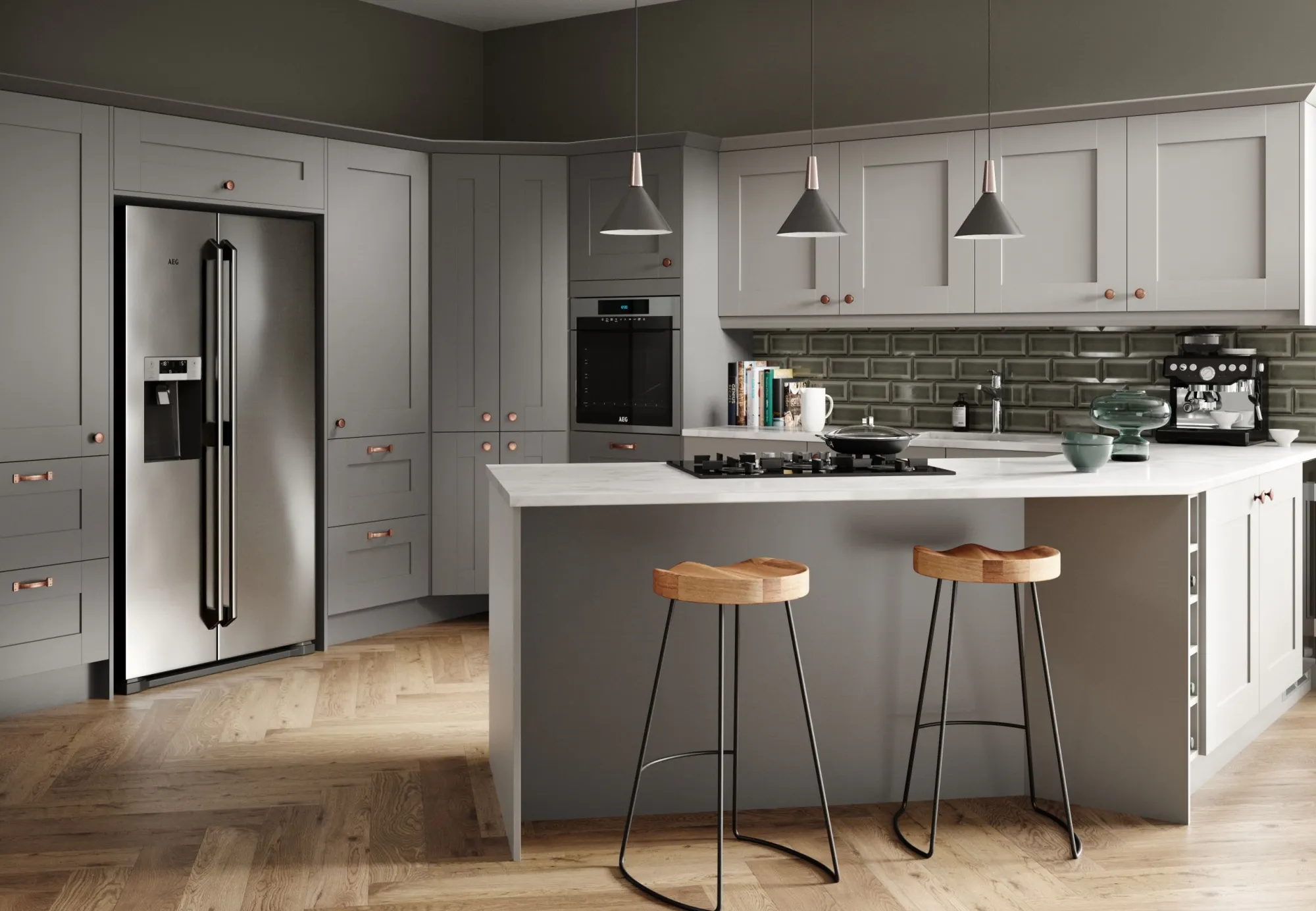
Walkways & Clearances: The Working Triangle
Good kitchen design isn’t just about cabinet sizes — it’s also about how easily you can move around the room. Clearances are especially important in busy family kitchens.
General guidelines include:
1. Gap between island and surrounding units: minimum 1000mm, with 1200mm ideal where space allows
2. Appliance clearance: enough room to fully open ovens, dishwashers and fridge doors safely
Carefully planned kitchen room sizes help create an efficient working triangle between the sink, hob and fridge. This classic principle — often referred to as the working or golden triangle of kitchen design — is explained in more detail in our blog on the golden triangle of kitchen design, where we look at how correct spacing improves flow, safety and day-to-day usability.

Kitchen Size in Feet vs Metres
While kitchens are designed and manufactured in millimetres, many homeowners still measure their rooms in feet — particularly in older homes.
As a quick guide:
> 1 foot = 304.8mm
> A 600mm unit is roughly 2 feet wide
Common Kitchen Sizes in Feet:
1. Small kitchen size in feet: around 8ft × 8ft
2. Standard kitchen size in feet: typically, 10–12ft wide layouts
Converting your measurements early helps avoid confusion when visualising layouts and planning appliance positions later down the line.

Ready to Take the Next Step?
If you’re worried about getting kitchen measurements right, you’re not alone — and you don’t need to tackle it yourself.
At More Kitchens, your journey starts with a free design appointment, where one of our experienced kitchen designers visits your home to understand your space, your lifestyle and your ideas. We carry out a full technical survey, taking care of everything from accurate measurements and layout planning to clearances, services and finishes.
From there, we manage the entire process for you. As a fully project-managed kitchen company, we look after everything from initial design right through to installation, coordinating each stage and giving you one dedicated point of contact.
With More Kitchens, you can move forward with confidence, knowing your kitchen is professionally designed, expertly installed and carefully managed from start to finish so if you’re ready to take the next step, book your free design appointment online today or visit your nearest kitchen showroom.
Frequently Asked Questions
What is the average size of a kitchen in the UK?
The average kitchen size in the UK is often cited as around 13 square metres, but this can vary significantly depending on the age and style of the property. Older homes and terraces typically have smaller kitchens, while newer builds and open-plan layouts tend to offer more space. In practice, layout and proportion are just as important as overall size when planning a kitchen.
What is the 3×4 kitchen rule?
The 3×4 kitchen rule refers to a kitchen measuring 3 metres by 4 metres, which is commonly considered a practical size for a well-functioning layout. A kitchen of this size can usually accommodate standard kitchen units, appliances and comfortable walkways, and may allow for features such as an island or dining space depending on the layout.
What are standard kitchen island dimensions?
There’s no single standard size for a kitchen island, but most islands start at around 1200mm x 600mm. Larger islands — particularly those with seating — often measure 1800–2400mm long and 900mm or more in depth. It’s also important to allow adequate clearance around the island, with a minimum of 1000mm recommended between the island and surrounding units.
How deep are standard kitchen units?
Standard kitchen base units are typically 570–600mm deep, which aligns with most integrated appliances and standard worktop depths. Wall units are shallower, usually around 300mm deep, to provide comfortable working space on the countertop below.
What is the standard height of kitchen worktops?
In most UK homes, the standard kitchen worktop height is around 900mm. This is based on a standard base unit height combined with a plinth and worktop and suits the majority of people for everyday food preparation and cooking.
What is the ideal size for a kitchen table?
The ideal size for a kitchen table depends on how many people it needs to seat and how much space is available. As a general guide, allow around 600mm width per person and enough surrounding clearance to comfortably pull chairs in and out. In smaller kitchens, compact tables or breakfast bars can offer a more space-efficient alternative.
Share this Post